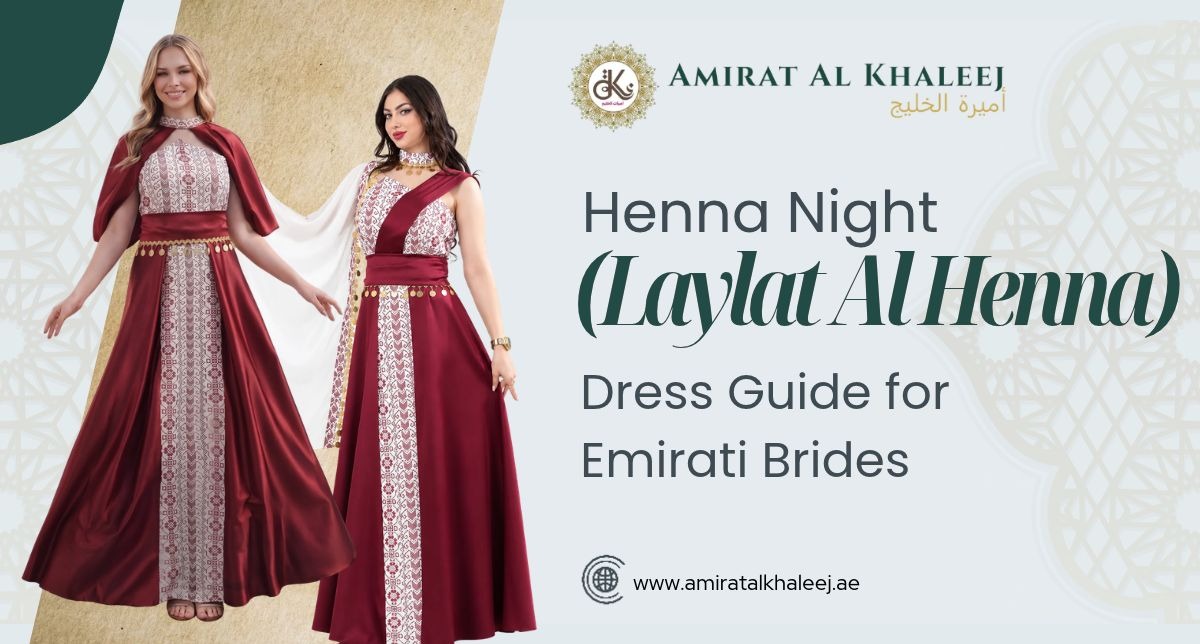
Your henna night dress is the first bridal look your family sees. In many Emirati homes, it’s the one they still talk about years later.
Last season, a bride from Al Khan came into our Al Mujarrah shop with her mom and two sisters.
Her white gown was already bought. The henna night was three weeks away, and she still had nothing she liked. Everything was too plain or looked too much like a wedding dress.
Her mom wanted green and gold. She just wanted sleeves that wouldn’t get in the way for four hours.
We made her a soft green mukhawar with hand talli on the sleeves. The next morning, she sent us a photo. Her hands were still wrapped in cloth.
We hear stories like hers every month.
Laylat Al Henna (ليلة الحناء) is usually the night before the wedding, sometimes a few days earlier. It’s a women-only night. The bride sits with her family and close friends while the henna artist decorates her hands and feet.
So this dress follows different rules from your wedding gown. It can be bolder and more traditional. It also has to be comfortable.
In this guide, we share what we’ve learned from dressing brides for this night. You’ll find the best styles, colours and embroidery.
We’ll also tell you when to book, so you’re not rushing like our Al Khan bride.
What Does an Emirati Bride Wear on Henna Night?
Most Emirati brides wear a mukhawar on henna night.
Some choose a thobe (soube) or an embroidered jalabiya instead. Green is the usual pick, almost always with gold work. A few go modern with a kaftan.
Here’s what each one is really like to wear.
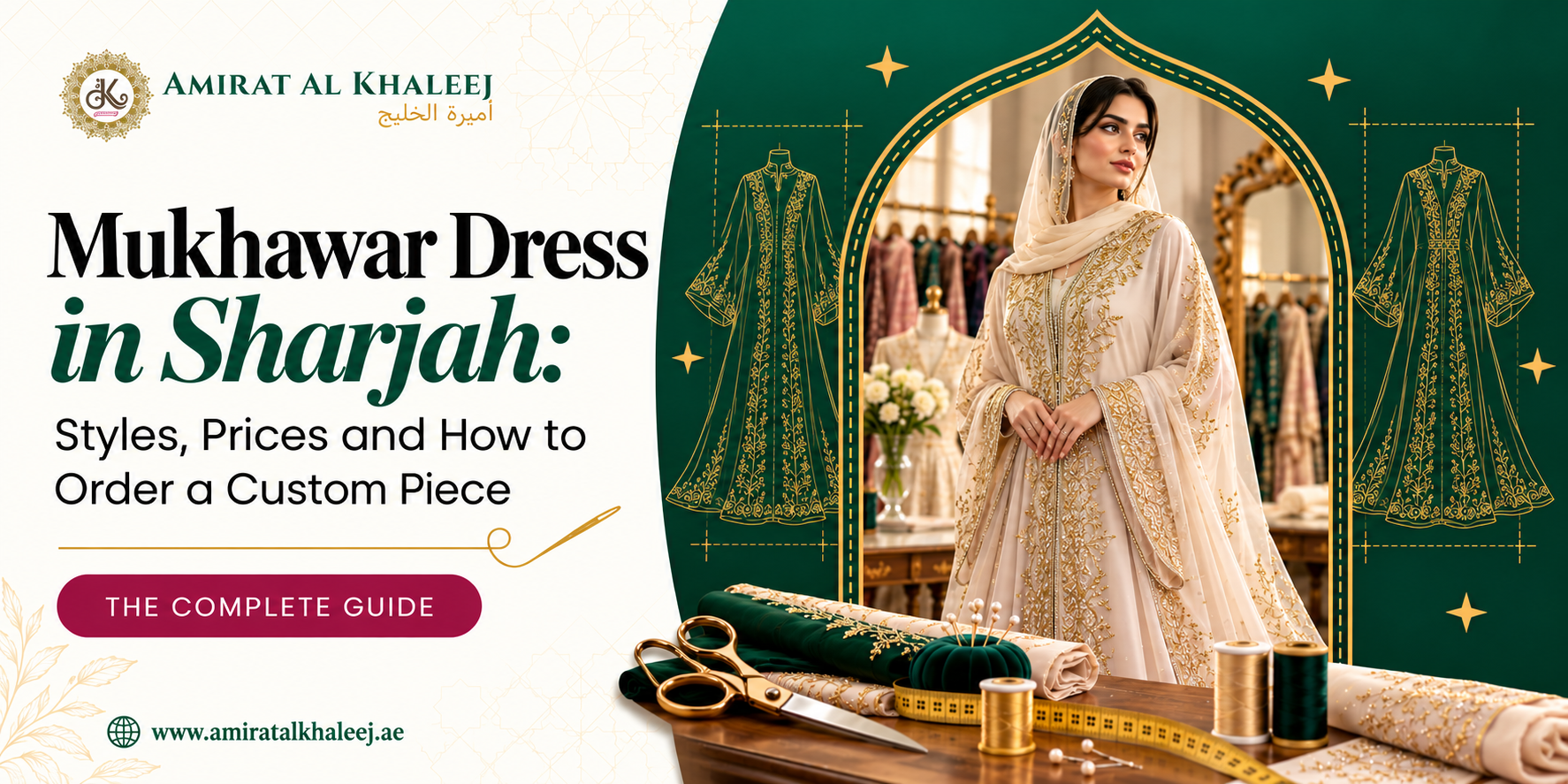
1. The Mukhawar: the classic henna night dress
Can’t decide? Go with a mukhawar. You won’t regret it.
It’s long and loose, but the neckline and sleeves are fitted and embroidered. Often there’s a talli braid along the edges.
Your grandmother will approve. So will the photographer.
For henna night, we usually go heavier on embroidery than we would for an Eid piece, and most of it goes on the sleeves. Think about it: your hands are what everyone’s looking at all night. Our Mukhawar collection has the necklines and sleeve work we do most.
2. The Thobe (Soube) over a fitted dress
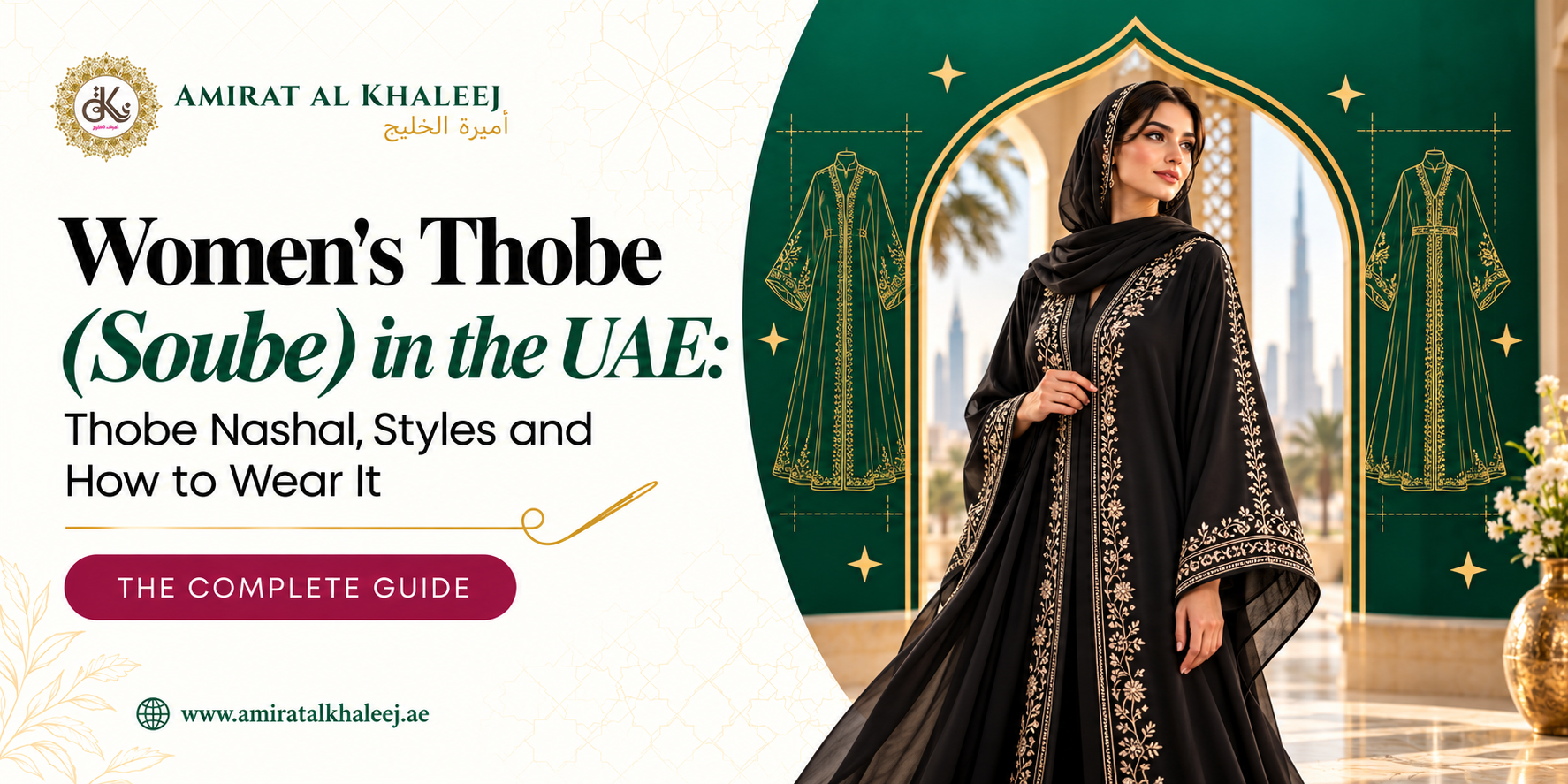
The women’s thobe (some call it thobe nashal) is a sheer, very wide embroidered layer you wear over a fitted dress. It’s dramatic. When a bride dances in one, the whole room watches. A lot of our brides wear it for their entrance and the dancing, before the henna starts.
The nice part is you can take it off once the henna is done, then slip it back on for photos. We wrote a whole women’s thobe guide if you want to see the styles.
3. The Embroidered Jalabiya: the comfortable choice
This one’s for the bride who wants to be comfortable. Nothing wrong with that.
A jalabiya is loose, so sitting for hours is easy. Add Moroccan or Gulf embroidery on the chest and cuffs, and it stops looking casual.
It works best for a smaller family henna. See current designs in our Jalabiya collection.
4. The Bridal Kaftan: the modern take
Some brides love tradition but don’t want to look like a copy of mom’s photos. Fair enough.
A satin or chiffon kaftan with zari or stone work lands somewhere in the middle. We make a lot of these when the henna night turns into a bigger party.
Have a look at our Kaftan collection.
| Style | Best for | Comfort while henna dries | Traditional feel |
|---|---|---|---|
| Mukhawar | Classic Emirati henna night | Good | Very high |
| Thobe (soube) | Arrival, dance, photos | Good (can be removed) | Very high |
| Jalabiya | Small family gatherings | Excellent | Medium–high |
| Bridal kaftan | Larger, modern parties | Very good | Medium |
What Colour Is Worn on Henna Night in the UAE?
Green. Ask most Emirati mothers, and that’s the answer, usually with gold embroidery. It’s tied to the henna itself and to wishing the couple a fresh, blessed start, so it’s still the colour families expect.
Brides have more room to play now, though. These are the colours we’ve been cutting most:
- Emerald or bottle green for the classic look. Pair it with gold tali.
- Sage or mint if dark green feels heavy. Softer, still traditional.
- Fuchsia or deep pink for brides who like to be noticed.
- Royal blue or teal. Both glow under evening lights.
- Gold or mustard to shine without stealing from your white gown.
Skip white and ivory. Save those for the wedding so the two nights don’t blur together.
The Best Fabrics for a Henna Night Dress
Pick something that breathes and won’t stain at the first drop of henna. You’ll be sitting a long time.
Here’s what we usually suggest:
- Chiffon or georgette. Light and floaty. Perfect for thobes and layered mukhawars.
- Crepe. Drapes nicely and doesn’t crease much after hours on a cushion.
- Satin. Gorgeous colour for kaftans. It does show marks, though.
- Velvet. Beautiful for winter henna nights, November to March. Far too hot in summer.
One warning: keep pale silk away from your cuffs. Wet henna can leave a mark that never comes out.
Talli, Zari and Hand Embroidery: What to Look For
Embroidery is what people remember about the dress.
Talli is the Emirati braid woven from metallic thread. You’ll find it on necklines and cuffs. It’s the quickest way to spot a real Emirati bridal piece.
Zari is metallic thread stitched into flowers or geometric patterns. Stone and beadwork catches the light in evening photos.
Ask your tailor to put the heaviest work on the sleeves and neckline. Those parts end up in every close-up henna photo.
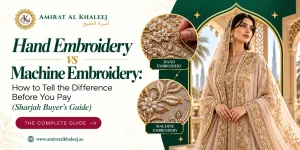
Paying for hand embroidery? Check it first. Our guide on hand embroidery vs machine embroidery shows you what to look for. You can also see our hand embroidery service.
Henna Night Dress vs Wedding Dress: What’s the Difference?
A henna night dress is traditional, colourful and built for comfort, while a wedding dress is usually white, structured and built for the big entrance. Here is how they compare:
| Aspect | Henna night dress | Wedding day dress |
|---|---|---|
| Typical style | Mukhawar, thobe, jalabiya, kaftan | Western-style gown or bridal gown |
| Colour | Green, jewel tones, gold | White or ivory |
| Fit | Loose, comfortable to sit in | Fitted bodice, structured |
| Sleeves | Can be pushed up or wide for henna | Often fitted or decorative |
| Embroidery | Talli, zari, gold thread | Lace, beading, crystals |
| Guests | Women only, close family and friends | Larger guest list |
| Wear time | 3–5 hours, mostly seated | Several hours, standing and walking |
The two nights feel completely different, so plan both outfits at the same time.
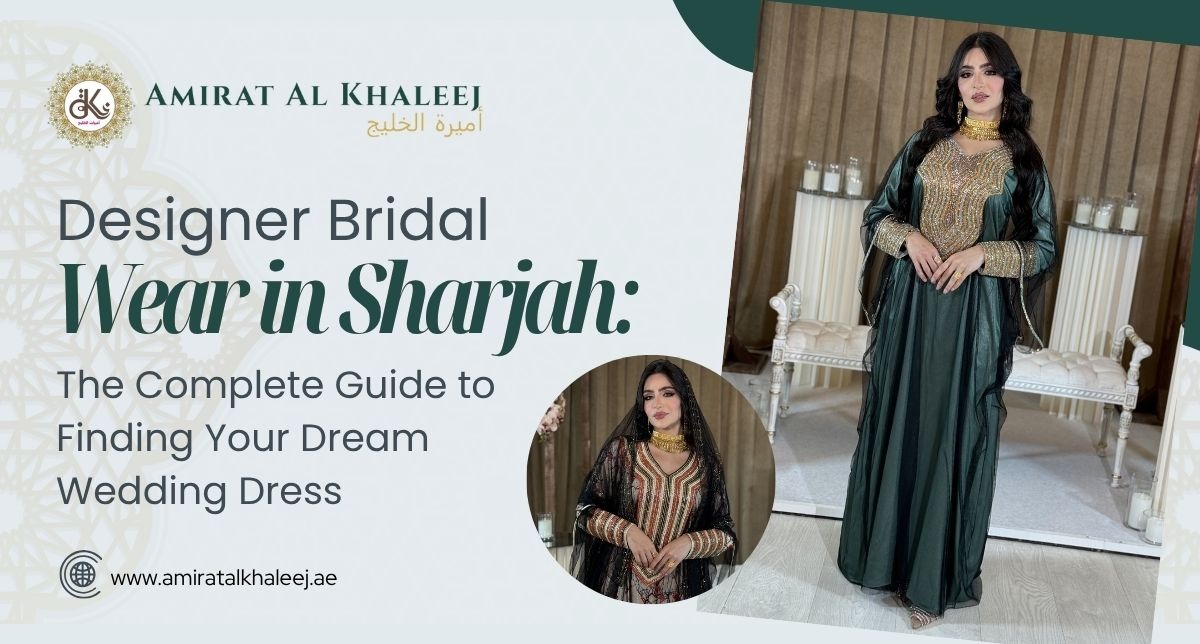
When colours and embroidery connect, your photos tell one story instead of two. Planning your wedding look too? See our bridal collection and gown tailoring guide.
7 Practical Tips for Wearing Your Dress While the Henna Is Applied
These are the details brides tell us they wish they had known:
- Go for wide or three-quarter sleeves. The henna needs your forearms. Tight cuffs will smudge her work.
- Ask for a hidden fastening on the cuff. A small press stud lets you fold the sleeve back, then close it for photos.
- Choose a darker skirt or lining. Dry henna flakes off into your lap. Dark fabric hides it.
- Keep stones off the lap. You’ll sit for hours. Stones there dig in and snag on cushions.
- Think about two outfits. Lots of brides wear a thobe to arrive and dance, then change into a jalabiya for the henna.
- Do your last fitting in your actual shoes. Flats and heels change the hem more than you’d think.
- Keep a cotton wrap close. Throw it over the dress while the paste is wet.
When Should You Order Your Henna Night Dress?
Give yourself 6 to 8 weeks for a custom henna night dress. Want heavy hand talli? Take the full 8.
This is the timeline we give brides at our Sharjah shop:
- 8 weeks out: Come in, pick your style, colour and fabric, and lock in the embroidery.
- 7 weeks out: We take measurements and start cutting.
- 3–4 weeks out: First fitting. We check where the embroidery sits on you.
- 1–2 weeks out: Final fitting, in your shoes.
- 3–5 days out: Pick it up, or we deliver anywhere in the UAE.
Running late? Our 48-hour rush covers alterations and lighter designs.
Heavy hand embroidery is different. Rushing it ruins it, so we’ll tell you straight what we can finish in time.
Most UAE weddings happen between October and April, when it’s cooler. If your date falls then, book earlier than you think.
How Much Does a Henna Night Dress Cost in Sharjah?
A custom henna night dress in Sharjah starts from around AED 450 for an embroidered jalabiya. A mukhawar with hand talli work starts from AED 1,200. Here’s what each style costs at our shop:
| Dress type | Starting price |
|---|---|
| Embroidered jalabiya | AED 450 |
| Mukhawar with machine embroidery | AED 550 |
| Bridal kaftan | AED 650 |
| Thobe (soube) with fitted inner dress | AED 900 |
| Mukhawar with hand Talli work | AED 1,200 |
All prices are starting prices for custom-made pieces. Send us your design on WhatsApp, and we’ll give you an exact quote.
The biggest factors in price are hand embroidery versus machine work, the quality of metallic thread, the amount of stone work, and the fabric. Your tailor should explain each of these before you agree on a price.
Frequently Asked Questions About Henna Night Dresses
What does an Emirati bride wear on henna night?
Most wear a mukhawar. Others pick a thobe (soube) or an embroidered jalabiya. Green with gold talli or zari is the classic look, and a loose cut makes the hours of sitting easier.
What is Laylat Al Henna?
Laylat Al Henna is the henna night held before an Emirati or Gulf wedding. It is a women-only celebration where the bride’s hands and feet are decorated with henna, surrounded by her female relatives and friends, with music, food, and traditional dress.
What colour should I wear for my henna night?
Green is traditional, usually with gold embroidery. Lots of brides now wear fuchsia, royal blue, teal, or gold instead. White and ivory are normally saved for the wedding.
How early should I order a custom henna night dress in Sharjah?
Order 6 to 8 weeks ahead. Heavy hand embroidery needs the full 8, and tailors get busy from October to April. Short on time? Amirat Al Khaleej has a 48-hour rush for alterations and lighter designs.
Can I wear a jalabiya for my henna night?
Yes, and plenty of brides do. It’s comfortable to sit in while the henna dries. With gold or Moroccan-style embroidery, it looks festive enough, especially for a smaller family gathering.
What sleeves are best for a henna night dress?
Wide or three-quarter sleeves. They leave your forearms free for the henna artist. A hidden cuff fastening helps too, so you can fold them back and close them again for photos.
Custom Henna Night Dresses at Amirat Al Khaleej, Sharjah
Amirat Al Khaleej is a custom tailoring and hand embroidery shop in Al Mujarrah, Sharjah, that makes henna night dresses, mukhawars, thobes, jalabiyas, and bridal kaftans for Emirati brides. Every piece is cut to your measurements, and our embroiderers work talli, zari, and stone designs by hand.
Why brides choose us for Laylat Al Henna:
- 100% custom fit, cut for how you will sit, move, and pose on the night
- Authentic hand embroidery, including traditional Talli work
- Multilingual service in Arabic, Hindi, Urdu, and Bengali
- 48-hour rush service for alterations and lighter designs
- Doorstep delivery across the UAE, trusted by brides from Dubai, Abu Dhabi and Ajman
Visit us: Abdullah Bin Salam Street, near Darwish Mosque, Al Mujarrah, Al Sharq, Sharjah. Open Saturday to Thursday, 8 AM–12 PM and 4 PM–11 PM (closed Friday).
Chat with us on WhatsApp at +971 56 722 6191 to book your henna night consultation.